ServicesPool Drain and Refill
Pool Drain and Refill in Guadalupe
Old pool water reaches a point where adding more chemicals only makes it worse. We drain it safely, check the empty shell and fittings, then refill and balance the fresh water step by step so your surface and equipment start clean.
Why Old Pool Water Has to Go
Every gallon that evaporates leaves its minerals behind. Calcium, salts and the cyanuric acid from stabilized chlorine tablets keep building until total dissolved solids (TDS) and stabilizer levels are high enough that chlorine stops doing its job. At that point, the only real fix is replacing the water.
A drain and refill sounds simple, but the details decide whether it helps or hurts. An empty plaster pool sitting in hard sun can crack or delaminate. A refill that stops halfway leaves a ring. Fresh water that is not balanced in the right order can etch new plaster or scale your heater. We run the job so none of that happens, and our CPO certified training guides the start-up chemistry once the water is back in.
What the Job Includes
- 01
Water testing before we drain
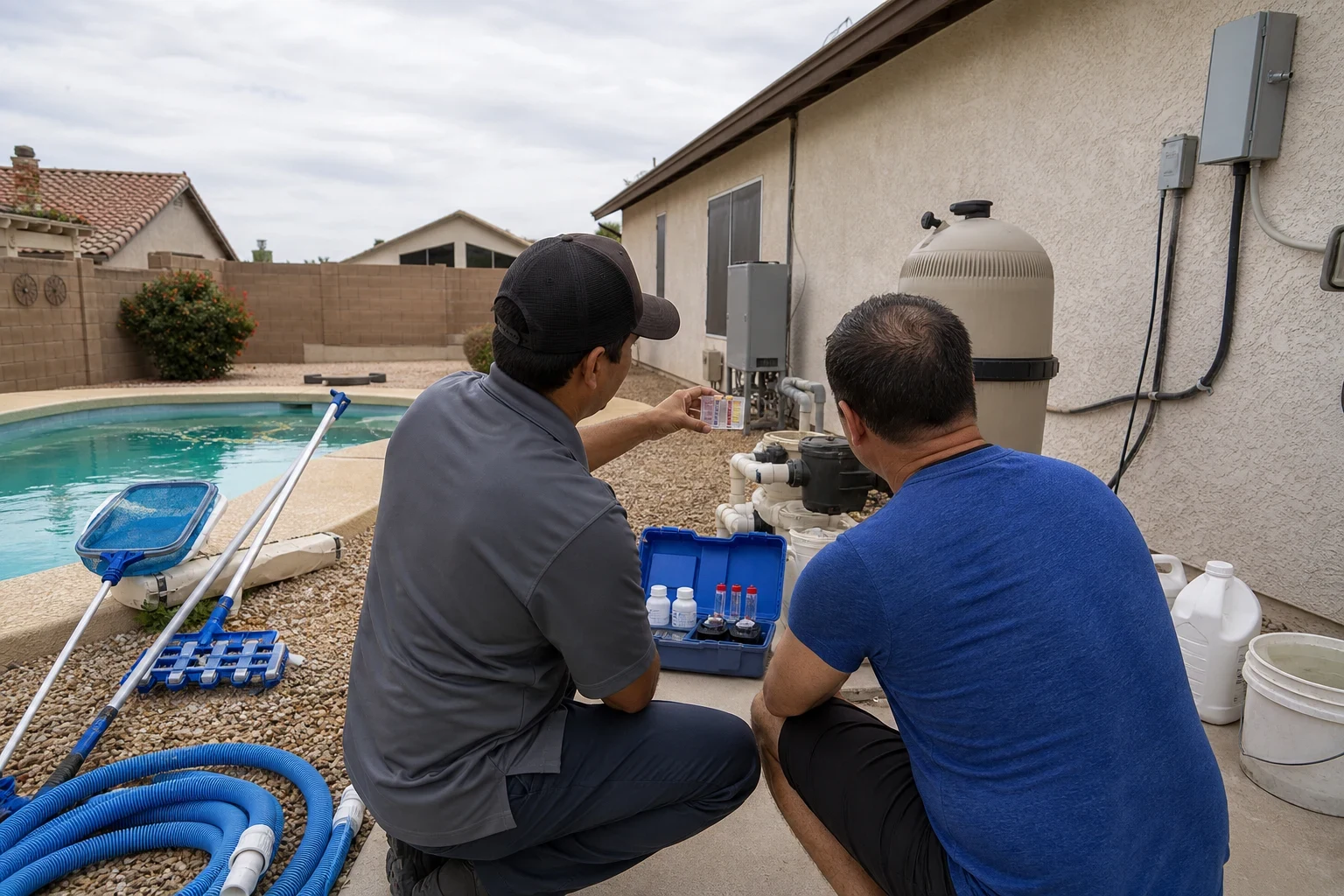
We test TDS, cyanuric acid, calcium hardness and salt so you know the drain is actually needed. If a partial drain will bring the numbers down, we tell you.
- 02
Controlled pumping to the right discharge point
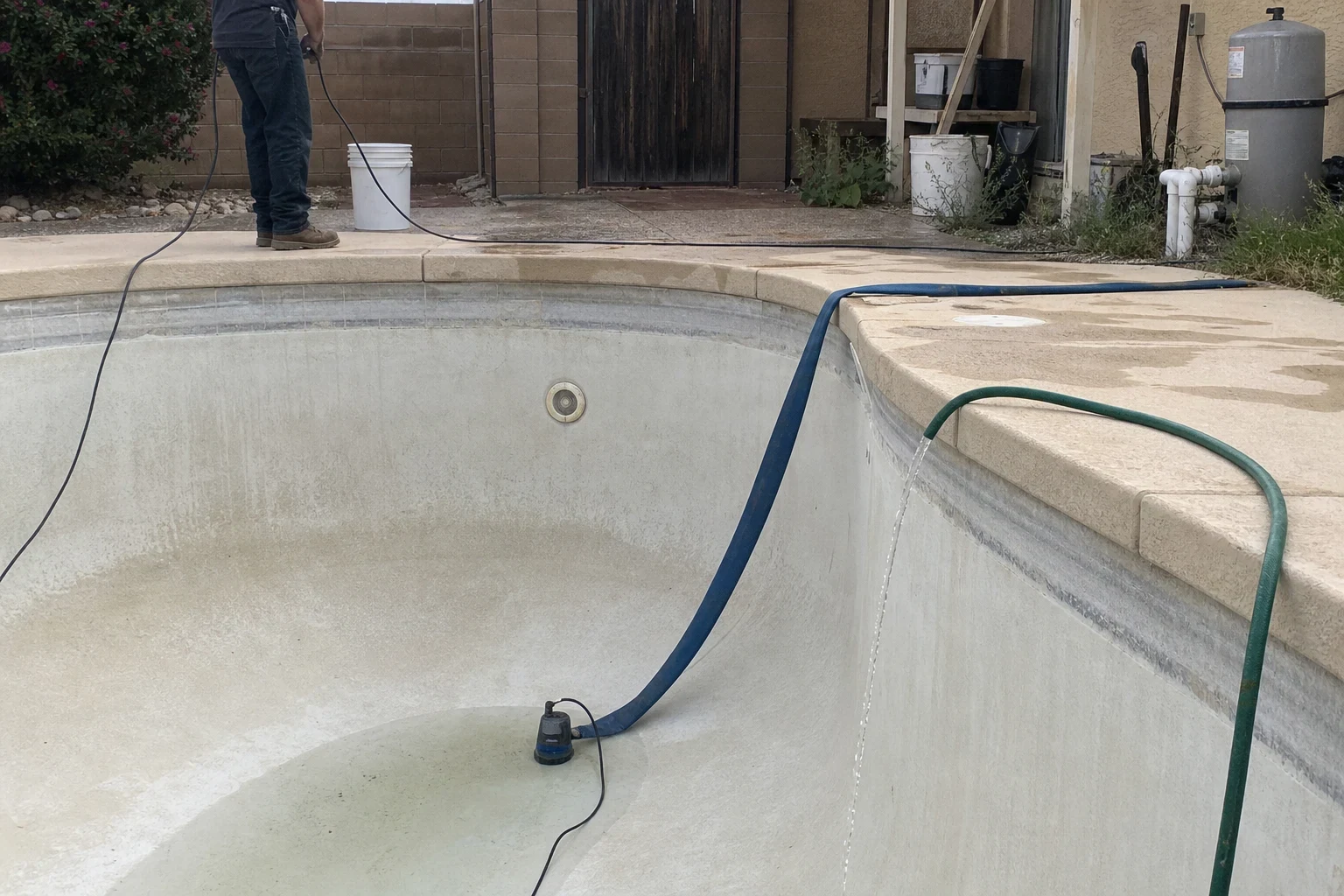
We use a submersible pump and route the hose where local discharge rules call for it, which in most of the Valley means your home's sewer cleanout rather than the street.
- 03
Hydrostatic valve and shell check
With the pool empty, we open the hydrostatic relief valve in the main drain and inspect the plaster, tile line, return fittings and light niche. You get photos of anything worth watching.
- 04
Continuous refill
We start the fill as soon as the shell is ready and keep it running without pauses, which prevents the waterline stain that forms when a fill stops and restarts.
- 05
Start-up balancing
We adjust alkalinity and pH first, then calcium hardness, then add stabilizer and chlorine. Getting that order right protects the surface and gives the sanitizer a clean baseline.
Questions about Pool Drain and Refill?
Call(480) 210-2298Signs Your Pool Needs Fresh Water
Chlorine disappears or never seems to work
High cyanuric acid locks up free chlorine. The test shows chlorine present, yet algae still grows.
Cloudy water that will not clear
When TDS is very high, clarifiers and filter cleaning only help for a few days before the haze returns.
White crust on tile and fittings
Heavy scale at the waterline and on return eyeballs points to calcium hardness that the water can no longer hold in solution.
Salt cell warnings
A salt system that keeps flagging high salt or scaling often means the water has concentrated past what the cell can handle.
It has been years since the last drain
In hard-water desert conditions, steady evaporation and top-offs concentrate minerals faster than most owners expect.
How Drain Day Runs
- 1
Test and plan
We confirm the readings, check the weather and plan the discharge route. We schedule drains for cooler stretches so the shell is never baking empty in summer heat.
- 2
Drain and protect
We shut off and protect the pump and heater, set the submersible pump and lower the water. Equipment never runs dry.
- 3
Inspect and clean
With the shell exposed, we open the hydrostatic valve, remove debris from the floor and inspect the surface. This is the moment to add an acid wash or calcium removal and tile cleaning if you want them.
- 4
Refill without stopping
Hoses go in and the fill runs continuously to the middle of the skimmer. Filling with a garden hose commonly takes a day or more, and the water comes through your home's meter.
- 5
Balance and restart
We prime the pump, restart the system and bring the chemistry into range in sequence. New plaster gets brushed daily during its first weeks.
What Moves the Price
Most of the cost comes from pool size, the condition of the water and what you choose to do while the pool is empty. We walk through each item on the phone and put the quote in writing before any work starts.
- Pool volume and depth
- Larger and deeper pools take longer to pump and need more start-up chemicals.
- Water condition
- Green or debris-heavy water means extra cleanup on the floor before the refill. Severe cases may start with green to clean recovery instead.
- Work done while empty
- An acid wash, tile cleaning or a pool repair found during inspection adds time and materials, and we price each one separately.
- Access and hose run
- A long distance to the sewer cleanout or a tight side yard adds setup time.
Drain and Refill Questions
How often should a pool be drained?
It depends on your water readings, not the calendar. In hard-water areas many pools reach high TDS or stabilizer every few years, faster with heavy tablet use. We test first and tell you if a partial drain will do.
Can I drain my pool in summer?
We avoid it. An empty plaster shell exposed to intense sun can dry, craze or start to delaminate. Spring, fall and winter are safer windows.
Will the empty pool float or crack?
Groundwater pressure can push on an empty shell, which is why we open the hydrostatic relief valve and keep the time empty as short as possible. We also check the shell for existing cracks before refilling.
Who pays for the water?
The refill water comes from your home's spigot, so it shows up on your water bill. We can estimate the volume so you know what to expect.
Do you handle drain and refill in Tempe and Chandler too?
Yes. We work in Guadalupe and nearby towns including Tempe, Chandler, Gilbert and Sun Lakes. Ask about your address when you call.
Start Over With Water That Works
Tell us your pool size and what the water is doing. We will explain whether a full or partial drain makes sense and give you a written quote.